Bioclimatic Pergola or Retractable Pergola? Differences and How to Choose
Both shade a terrace and keep the rain off. The difference lies in what the roof is made of and how you want to use it through the day.
5 min read · İNORMA
The core difference: aluminium louvres or fabric
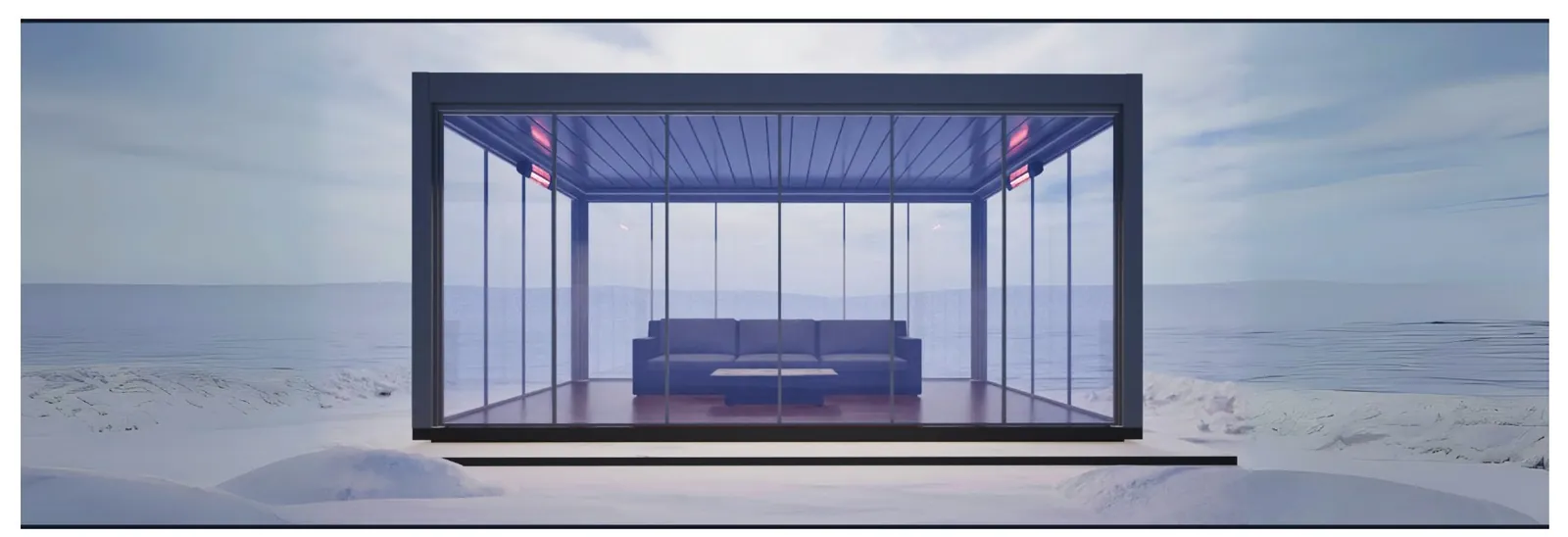
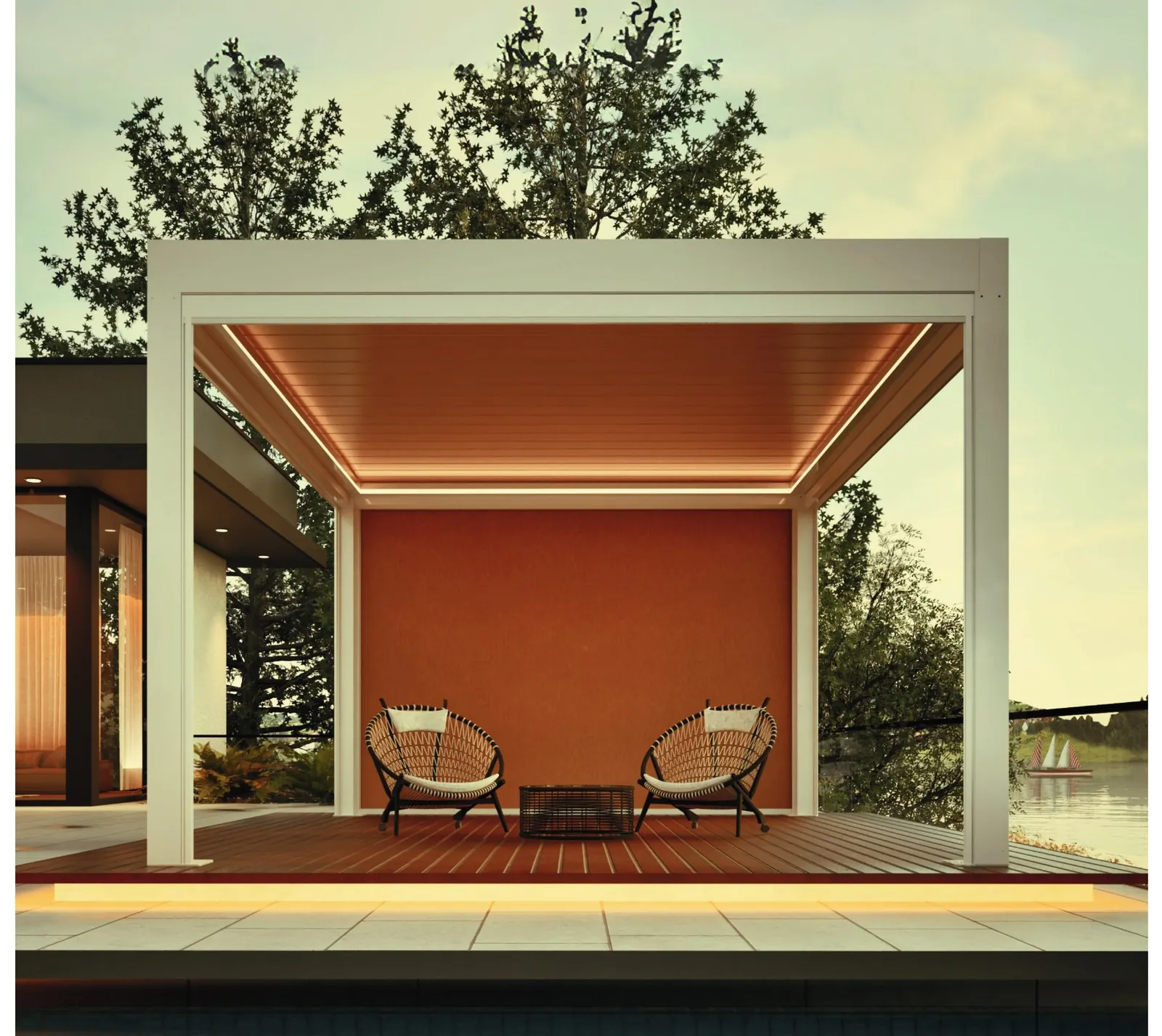
A bioclimatic pergola’s roof is made of motorised aluminium louvres. On SOLARA BIO L-200 they rotate up to 85° and also retract completely; on VENTO BIO X-300 the panels rotate to 105° or retract.
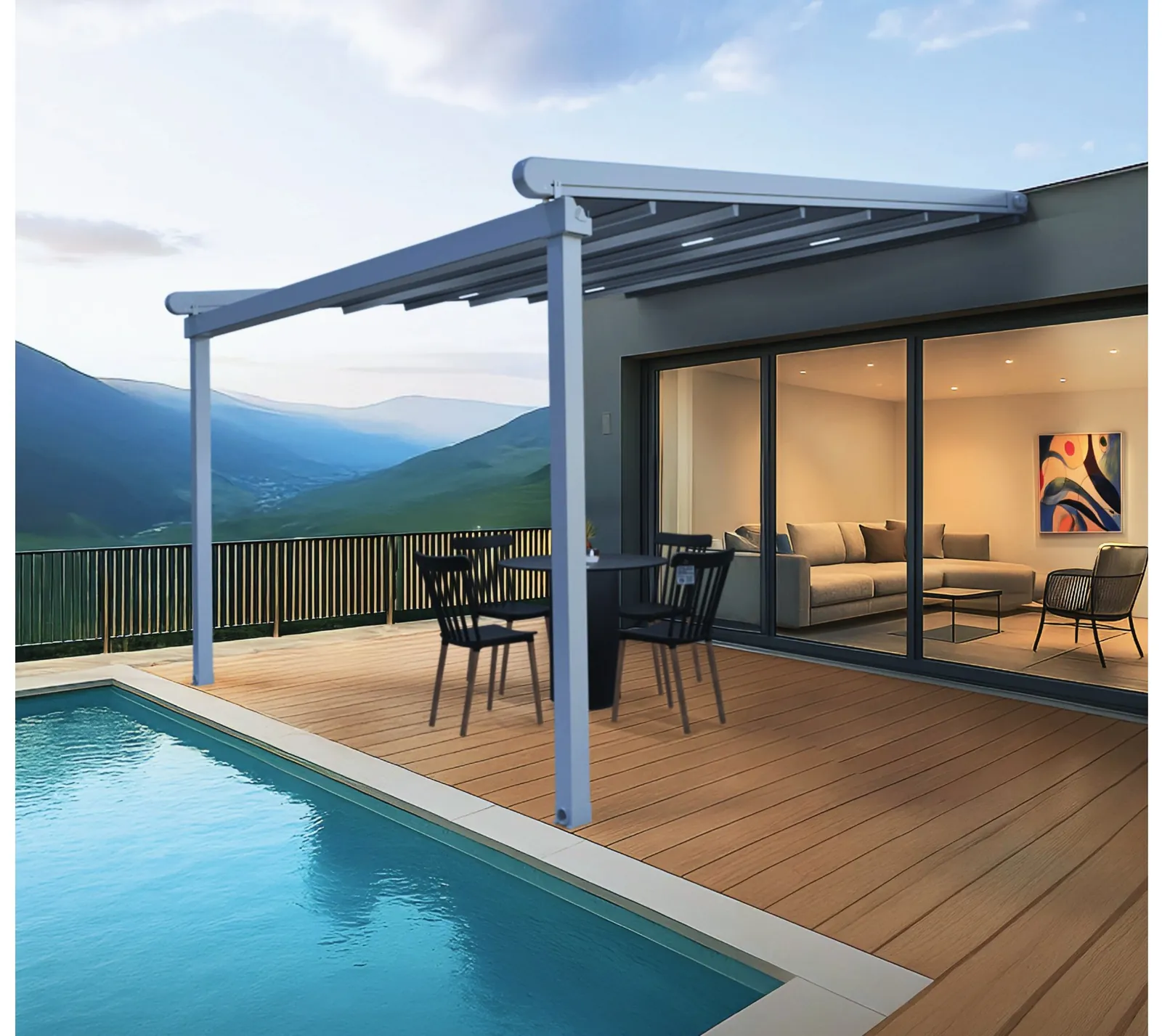
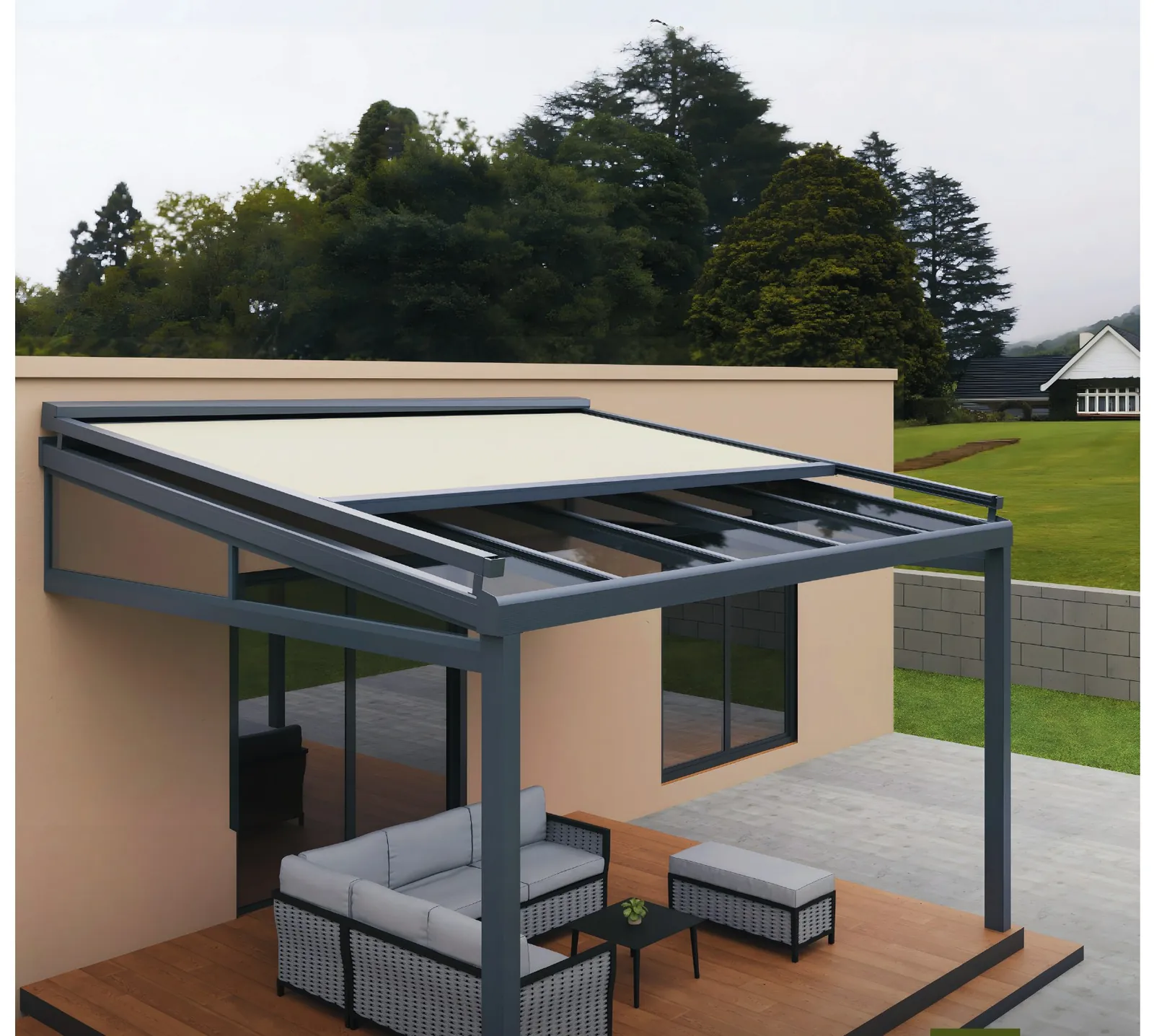
A retractable pergola’s roof is a waterproof fabric that opens and closes on rails. VELUM PRG T-500 uses HF-welded PVC blockout fabric on a 70 × 150 mm custom rail.
Ventilation and light control
Even with the louvres partly open, warm air escapes while shade is kept. That makes a bioclimatic pergola more comfortable at midday in hot, sunny places.
A fabric roof is either open or closed; part-way positions give partial shade but none of the angled ventilation louvres offer.
Rain, wind and winter
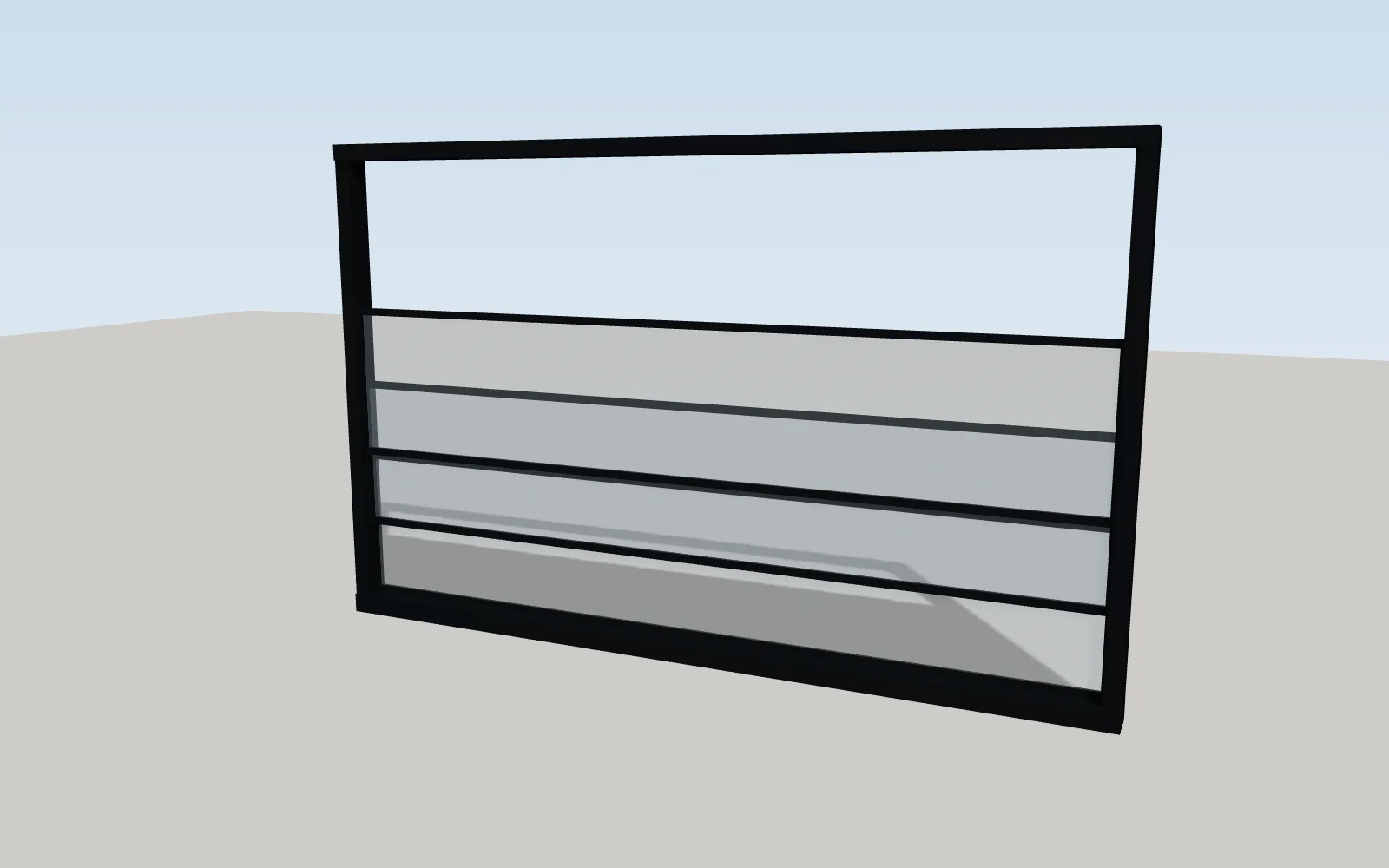
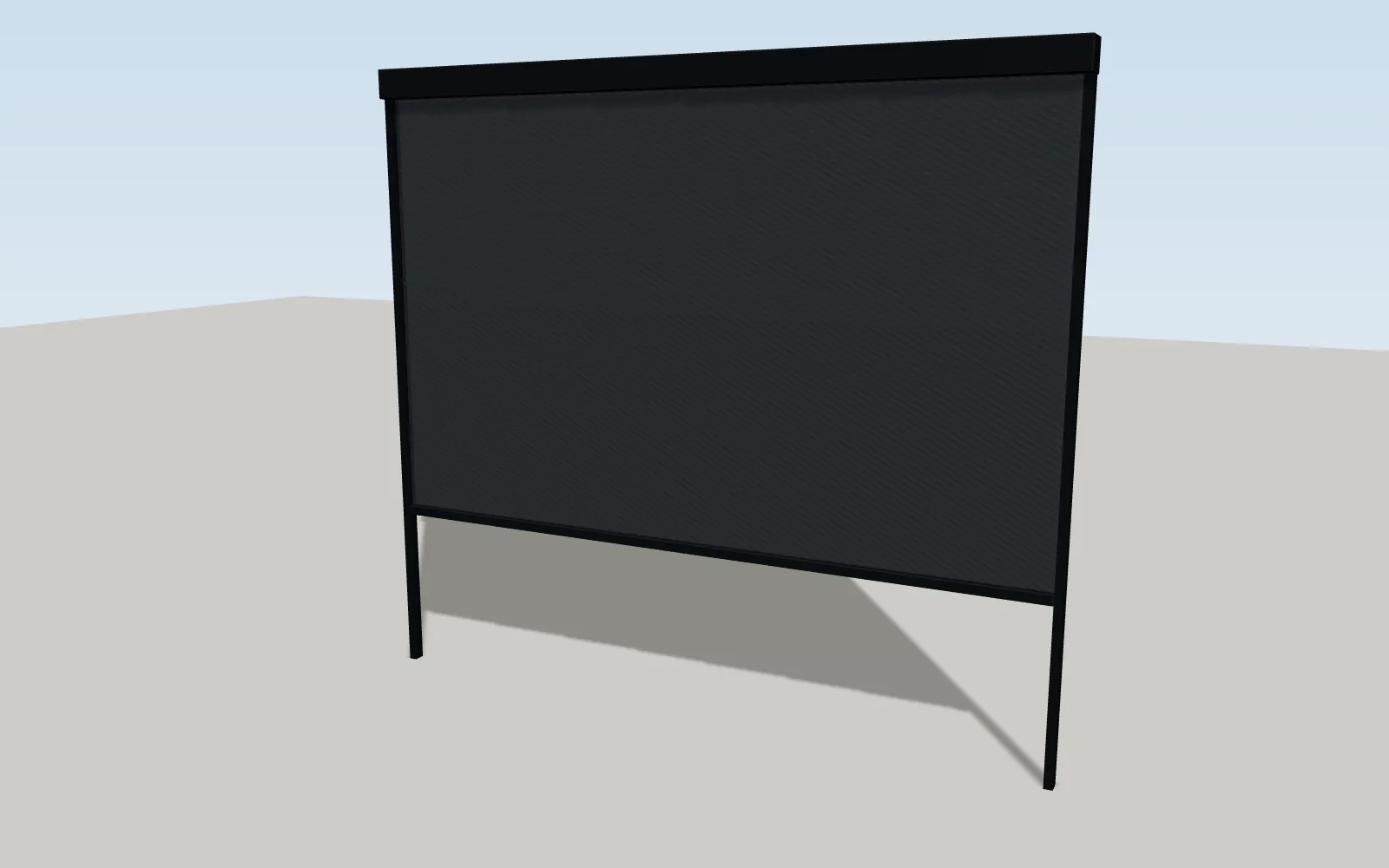
Both keep the rain out when closed and lead water to the gutter. A bioclimatic pergola can close on its own with a rain sensor. Close the sides with guillotine glass, sliding glass or zip screens and either system can be used in winter.
Look and maintenance
A bioclimatic pergola reads as permanent architecture. A retractable pergola is lighter and more economical over wide spans. Fabric can wear over the years; aluminium louvres need nothing beyond regular cleaning.
Quick decision list
Spend whole days on the terrace, want to manage the sun by angle and want a permanent structure: bioclimatic pergola. Want to cover a large area on a tighter budget, mostly for evenings and weekends: retractable pergola.
FAQ
Which lasts longer?
A louvred bioclimatic pergola has no fabric to wear out. SOLARA and VENTO come with a 5-year manufacturer warranty.
Which covers a larger area?
The VELUM retractable pergola is economical across wide fronts with a 5 m projection; a single SOLARA module reaches 6000 × 6975 mm.